
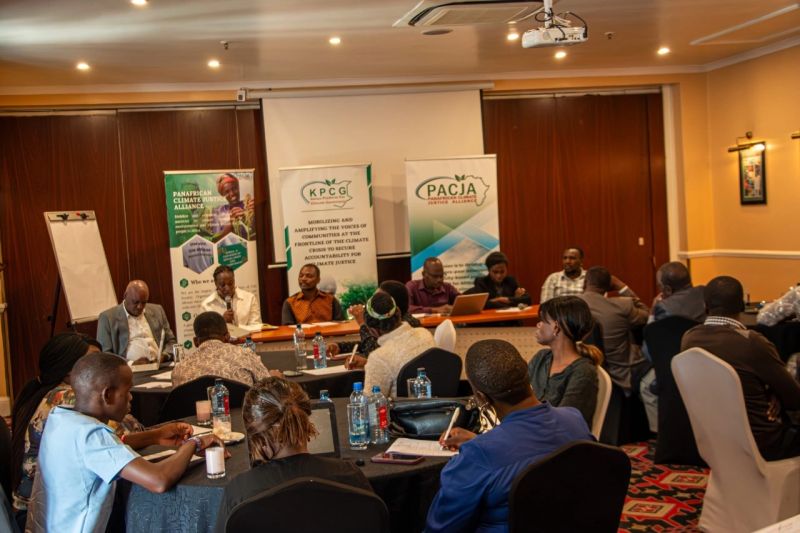
In a powerful statement at a press conference held at the iconic Sarova Stanley in Nairobi, the African Network for Climate Action (ANFCA) joined forces with the Pan African Climate Justice Alliance (PACJA) to voice critical concerns regarding the recently concluded Green Climate Fund (GCF) Board Meeting in Kigali. As discussions wrapped up, lingering worries echoed among the attendees about the future of climate funding and the need for more inclusive engagement.
Together with other Non-State Actors, including the Conservation Alliance of Kenya (CAK), ANFCA highlighted the pressing need for expanded consultations with civil society organizations and local communities, which have often been sidelined in important climate conversations. “Communities and Civil Society Organizations (CSOs) continue to be overlooked,” one representative emphasized, reinforcing the necessity for these stakeholders to be integrally involved in funding processes.
At the heart of our message is a call to action: we urge the GCF Board to recognize that inclusive dialogue is not just beneficial but essential for unlocking the potential of climate finance. We stressed that without the input and perspectives of those directly impacted by climate change, funding will undoubtedly fail to reach its intended beneficiaries.
ANFCA, PACJA, and other allied organizations are committed to uniting their voices to express dissatisfaction over delays in discussions surrounding the replenishment of the Green Climate Fund. We understand that timely funding is critical for effective climate action and resilience-building initiatives. With this in mind, we proposed constructive solutions aimed at improving the utilization of these vital resources.
Our call is simple yet profound: It is time for Non-State Actors to join forces, advocate for accountability, and demand a proactive approach to climate funding that prioritizes the needs of vulnerable communities. Further, we believe that only through collaboration can we ensure that every dollar of climate finance makes a meaningful impact.
As we move forward, we envision a roadmap where inclusive dialogue becomes the cornerstone of climate policy. This requires not just words but tangible actions that reflect a commitment to equity and justice for all stakeholders involved. Our gathering in Nairobi was not only a press conference; it was a rallying point for collective action and an urgent shout for inclusive practices in climate finance.
The statement released today serves as a clarion call for all actors in the climate arena to prioritize engagement and transparency. Only by embracing a collaborative spirit can we hope to address the funding bottlenecks that prevent communities from realizing their climate-resilience aspirations. Together, let us seize this moment to advocate for a more equitable future, where every voice matters in the pursuit of climate justice. The time for change is now—let’s act decisively for a sustainable tomorrow.